





 Spanish News Today
 Alicante Today
 Andalucia Today

The annual calendar in the Region of Murcia is packed with local fiestas which have been awarded Regional, National and International Tourist Interest status, and the autumn features numerous of these once the heat of the summer has died down and the wearing of costumes is a somewhat more attractive proposition!
At this point, the beaches take something of a back seat and the inland cities and towns feature highly among the most visited and interesting places in the Costa Cálida, As they celebrate episodes form their history this is a time to absorb some of the local culture and traditions, as well as perhaps learning something about what Murcia was like in previous centuries and how it became what it is today!
And although there are some themes in common – for example, commemorations of the period in which the Moors were driven out of the region and replaced by Christian kings – of course each town and city is different in this respect…
Late September: the Carthaginians and Romans in Cartagena
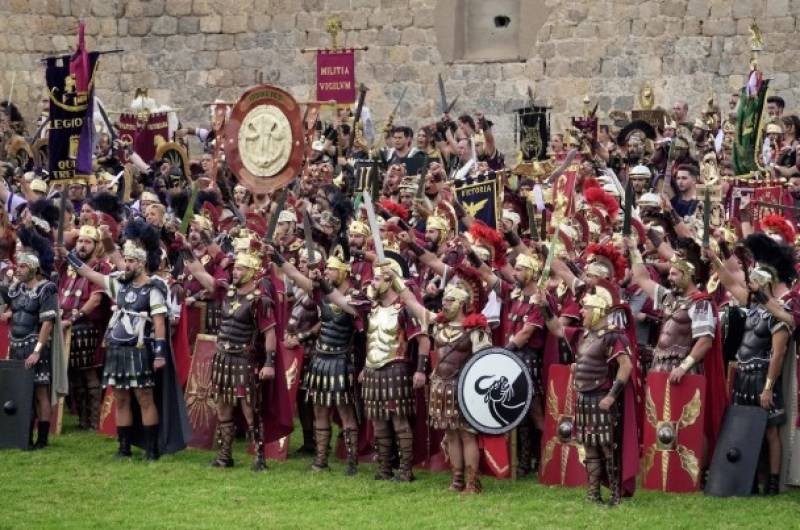
The autumn begins with a bang in Cartagena with a week of fiestas which include one of the most spectacular series of historical recreations in the whole of the Mediterranean: the Carthaginians and Romans (which boasts International Tourist Interest status).
For a few days a year the city turns back the clock to the 3rd century BC and the Second Public Wars, during which the new city of Qart Hadasht had recently been founded by the dynasty of Hasdrubal and Hannibal. But the Roman army conquered the city in 219 BC, renaming it Carthago Nova, and during the fiestas over 4,000 locals join in the troops of both sides as they bring back to life the events of that historic conflict: included are representations of the daily life, the ceremonies and the military tactics of the time.
Among the most iconic moments are the symbolic lighting of the Sacred Flame at the start of the week, the representation of the founding of Qart Hadasht, the marriage of Hannibal and Himilce and the monumental final battle in which the Romans proved victorious, taking place close to the port itself.
Meanwhile, the streets of the city are bustling with historical street theatre, traditional food and drink are served at the fiestas encampment, and a wide range of entertainments is put on for the enjoyment of all ages.
And of course, you can complete your visit with a stop-off at the Roman Theatre of Cartagena!
November: Lorca returns to its days as a medieval frontier city
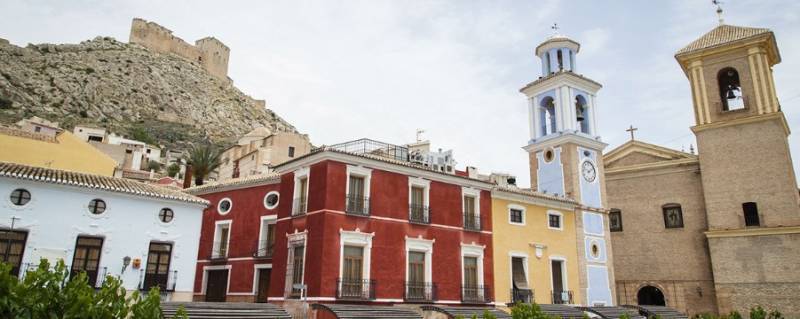
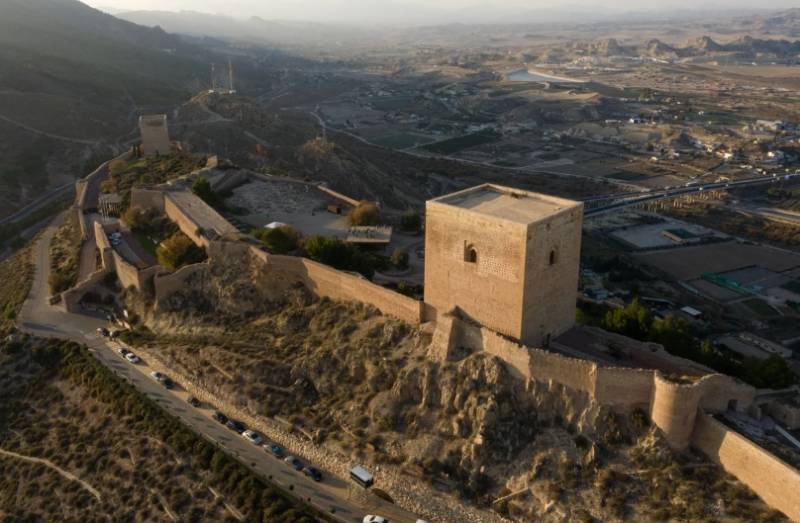 The fiestas of San Clemente, the patron saint of Lorca, are held during the second half of November and have been awarded National Tourist Interest status for their way of recalling the city’s past as an outlying fortress on the frontier between Christian and Moorish kingdoms.
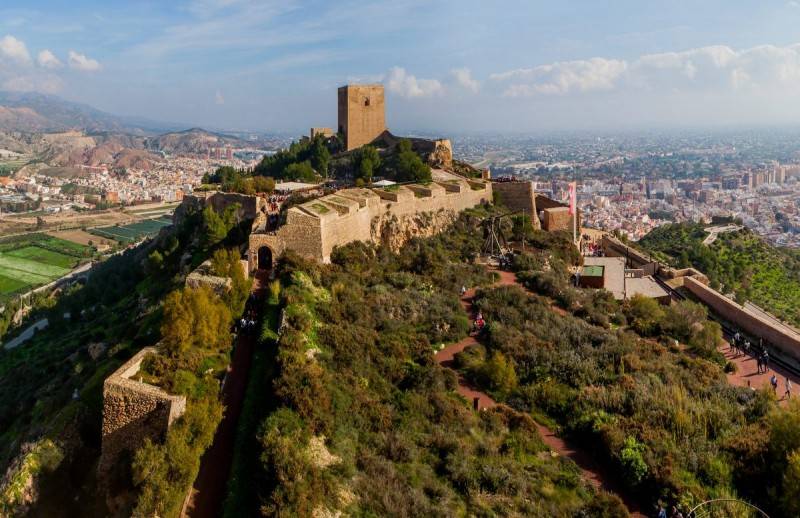
After the arrival of Christian rulers in Murcia and other parts of Spain in the 13th century the Moorish domain in the Iberian Peninsula was limited to Andalucía, and Lorca stood very close to the border: hence the construction of the castle which proved to be impregnable during the Middle Ages and which still stands proudly behind the built-up area. For two weeks the old city centre of the City of the Sun recall the age when Christians, Moors and Jews lived alongside one another here, and knights, damsels, household retinues and other characters can be seen in the streets and the main events include the recreation of the skirmish which took place on the slopes beneath the castle, a medieval tourney and a grand historical parade featuring period costume and some of the exquisite embroidered garments of Lorca.
Another hub of activity is the medieval market in the main squares of the centre, while there are also special events at the castle, home to the remains of the best preserved 15th-century synagogue in Spain.
December: gunpowder and time-honoured tradition in Yecla
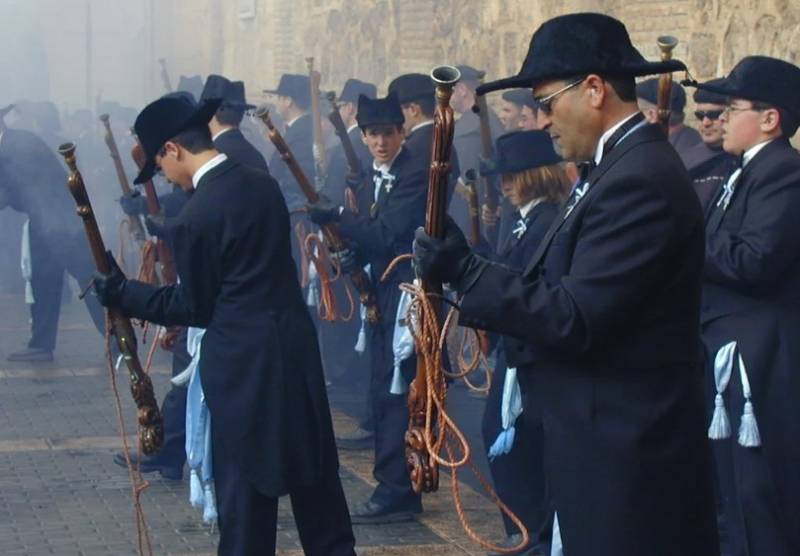 From 5th to 8th December the town of Yecla in the north of the Region of Murcia holds its Fiestas de la Virgen, a celebration which can boast documented evidence showing that it has existed since 1642.
In that year a group of 61 locals from Yecla, led by Captain Martín Soriano Zaplana, returned from battle in the War of Spanish Succession completely unscathed and climbed to the religious sanctuary dedicated to the Immaculate Conception above the town to give thanks for their good fortune. Due to the military occupation the fiestas contain a very characteristic element: the proliferation of gunfire from replicas of ancient arquebuses, enveloping the streets in the smoke and smell of gunpowder while making a thunderous noise: if you’re going along, take earplugs!
The main events are the descent of the figure of the Virgin from the sanctuary to the distinctive Basílica de la Purísima, the “Alboradas” at dawn, when the fiestas dignitaries parade in their official paraphernalia and of course the volleys of gunfire, as well as the “Juego de la Bandera” ante la imagen patronal.
The main procession is held on December 8, the feast day of the Immaculate Conception and a national holiday in Spain, and the fiestas have recently been awarded International Tourist Interest status.
Christmas and January: living nativity scenes and the Cuadrillas festival in Barranda
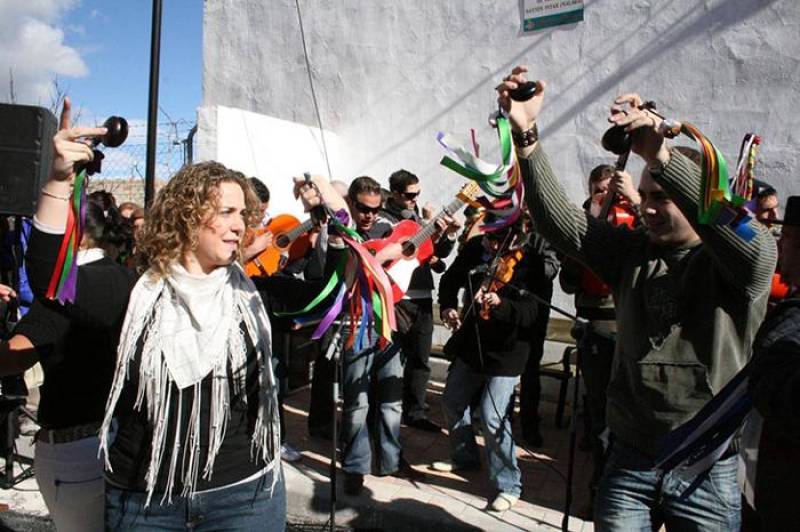 A traditional Christmas in Murcia generally entails a return to the traditions of the “huerta” farmland around the regional capital and the municipalities in the north-west of the Region.
Various large-scale living nativity scenes are created, the largest of them in El Raal (just 10 km north-east of the regional capital) and historic old towns such as Aledo, in the mountains of Sierra Espuña: here, the streets are transformed into scenes from the bible and craftsmen of old play their trades.
On the last Sunday of January the Fiesta de Cuadrillas is held in Barranda, in the countryside of Caravaca de la Cruz, another event of National Tourist Interest standing. The “cuadrillas” are groups performing traditional country music and dance, and similar associations converge on Barranda from all over Spain in the open air to an appreciative audience.
Comfort food for the winter!
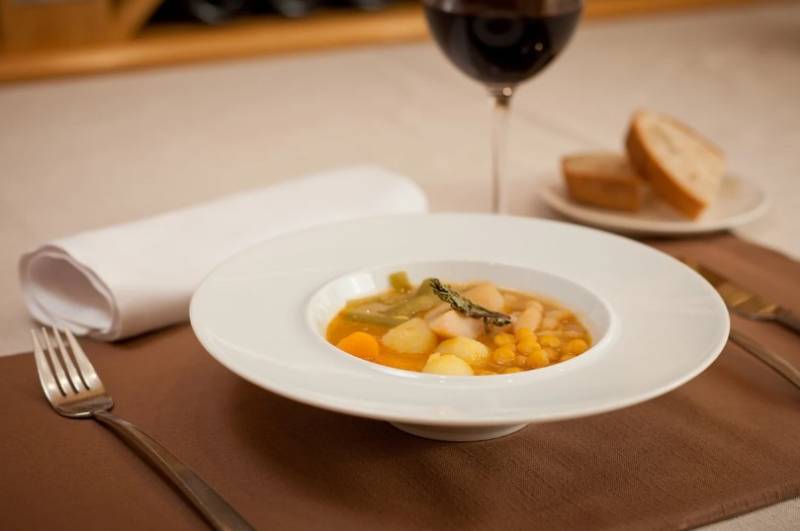 Finally, it would be remiss not to mention the traditional autumn and winter food in the Region of Murcia! As the cooler weather sets in comfort food is very much the order of the day, with pot dishes taking pride of place, among them many vegetable-based stews such as “ollica de verduras”, soups of chard and chickpeas and wheat sitting alongside a winter gazpacho containing game.
During the Winter the typical wines of northern Murcia provide extra fortification against the elements, especially those bearing the DO labels of Jumilla, Yecla and Bullas, while those with a sweet tooth will delights in the range of traditional Christmas goodies featuring almond cordials, “tortas de recao”, “mantecadas” and “alfajores”.
Source: ITREM
Sign up for the Spanish News Today Editors Roundup Weekly Bulletin and get an email with all the week’s news straight to your inbox
Special offer: Subscribe now for 25% off (36.95 euros for 48 Bulletins)
Read some of our recent bulletins:
Discount Special Offer subscription:
36.95€ for 48 Editor’s Weekly News Roundup bulletins!
Please CLICK THE BUTTON to subscribe.
(List price 3 months 12 Bulletins)